
Participatory Map
Discover how communities around the world demonstrate Mobile Networked Creativity through innovative solutions, technological appropriation, and collective reinvention.

About The Map
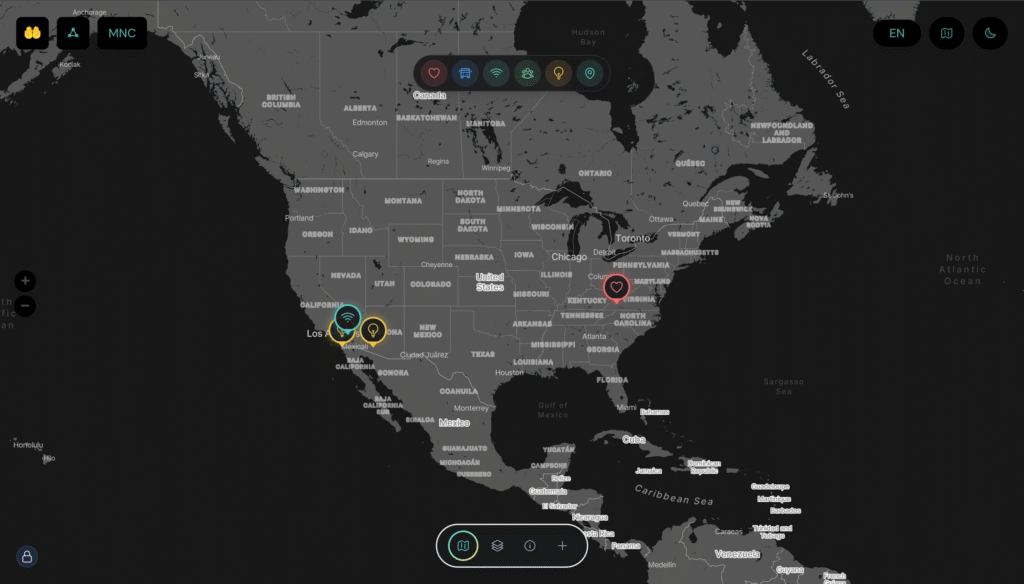
This participatory map, developed in collaboration with computational designer Carlos Sandoval Olascoaga and this team, records the creative technology practices of low-income communities around the world, using both community-generated data and our existing documentation from the Mobile Networked Creativity book
The mapping platform is designed specifically to reduce technological barriers for low-income participants, including accessibility features critical for contexts where individuals primarily access the internet through mobile devices, often lack high-bandwidth connectivity, and are non–native English speakers. These features include a mobile-friendly interface, text-to-voice interface, voice recording and photo submission to reduce text barriers, multilanguage interfaces supporting automatic translations with an AI-bot user support, low-bandwidth optimization, and offline submission for intermittent internet access.
This platform captures specific technology practices and their community impacts, as well as demographic and geographic context, and it solicits community participation in our project. The platform allows communities to share their mobile networked creative practices, learn, and repurpose practices developed in other communities. It is used to collect data to help us better understand the conditions under which mobile networked creative practices emerge and are sustained within low-income communities. Most importantly, it makes community-driven grassroots creativity visible to policymakers and industry to inform more equitable technology design and resource allocation.
We hope this project will inform policy debates about mobility equity, digital inclusion, and community development by providing location-based and community-engaged insights about effective bottom-up creative solutions. Rather than imposing external interventions, our findings might help policymakers identify how to support existing community innovations without undermining their grassroots character.
By documenting and amplifying often-invisible community creativity, this project challenges dominant narratives about urban and rural poverty and demonstrates how marginalized communities actively work to expand opportunities for social mobility. These insights are crucial for developing more effective, equitable, and sustainable approaches to addressing persistent inequalities, while localizing power. We built this online resource for creating awareness of mobile networked creative practices.
— de Souza e Silva, A. & Xiong-Gum, M. (2026). Mobile Networked Creativity: Transforming Precocity into Localized Power, p. 209. MIT Press.